
NCERT Notes Class 7 Social science (Geography) Chapter 2: Understanding the Weather के अंतर्गत मौसम को आकार देने वाले प्रमुख घटकों—जैसे तापमान (Temperature), वायुदाब (Atmospheric Pressure), पवनों की दिशा और गति (Winds), आर्द्रता (Humidity) और वर्षा (Rainfall)—के बीच के गहरे अंतर्संबंधों को स्पष्ट करता है। तथा तापमान में अंतर से वायुदाब में बदलाव आता है और इसी अंतर के कारण हवाएं उच्च दाब से निम्न दाब वाले क्षेत्रों की ओर चलती हैं। इसके साथ ही, यह कृषि नियोजन, आपदा प्रबंधन (जैसे चक्रवात और बाढ़ की पूर्व चेतावनी), उड़ानों के संचालन और मौसम पूर्वानुमान तकनीकों के रणनीतिक महत्व और जलवाष्प के संघनन से बनने वाले बादलों और वर्षा के विभिन्न रूपों के वैज्ञानिक कारणों को भी स्पष्ट करता है।
मौसम और इसके तत्व (Weather and its Elements)
- मौसम (Weather): किसी निश्चित समय और स्थान पर वायुमंडल की तात्कालिक स्थिति।
- वायुमंडल (Atmosphere): पृथ्वी को चारों ओर से घेरने वाली गैसों (हवा) की परत।
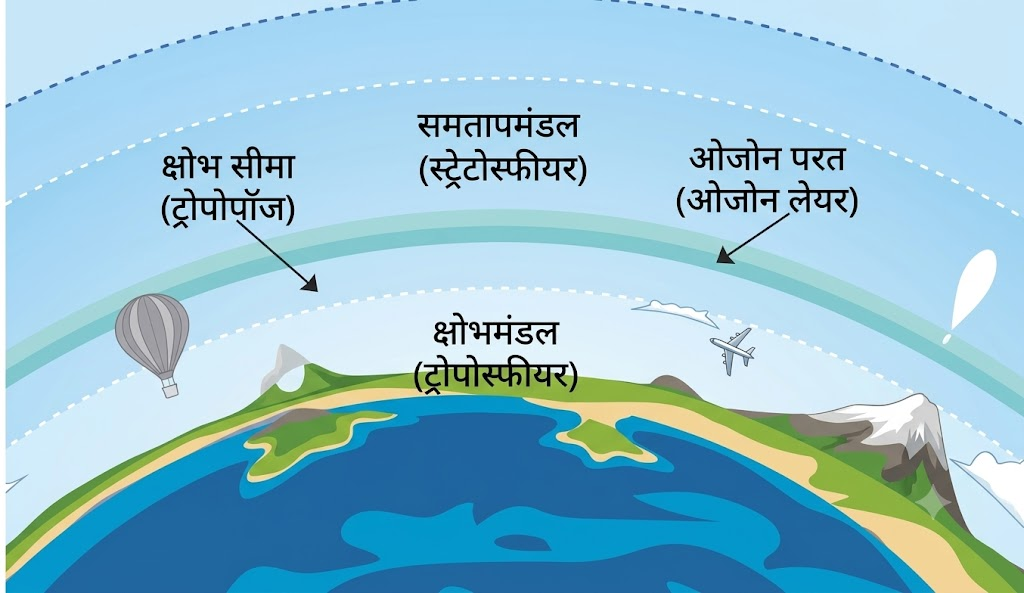
क्षोभमंडल (Troposphere): वायुमंडल की प्राथमिक परत
- स्थिति व महत्व: यह वायुमंडल की सबसे निचली परत है जहाँ समस्त जीव सांस लेते हैं।
- मौसम संबंधी घटनाएँ: बादल, वर्षा, तूफान जैसी लगभग सभी मौसमी गतिविधियाँ क्षोभमंडल में ही घटित होती हैं।
- परत की मोटाई:
- क्षोभमंडल की ऊंचाई 6 से 18 किमी तक होती है।
- ध्रुवों (Poles) पर: ठंड के कारण हवा सिकुड़ती है, अतः मोटाई कम (लगभग 6-8 किमी) होती है।
- विषुवत रेखा (Equator/Tropics) पर: गर्म हवा के फैलने (Convection) के कारण मोटाई अधिक (लगभग 16-18 किमी) होती है।
मौसम के 5 मुख्य तत्व (Elements of Weather)
| मौसम का तत्व | वैज्ञानिक परिभाषा | माप / विशेष रूप |
| तापमान (Temperature) | वायुमंडल के ठंडा या गर्म होने की स्थिति। | सार्वभौमिक मानकों द्वारा मापा जाता है। |
| वर्षण (Precipitation) | आकाश से जल का किसी भी रूप में नीचे गिरना। | वर्षा (Rain), हिमपात (Snow), स्लीट, ओले (Hail)। |
| वायुमंडलीय दबाव (Atmospheric Pressure) | पृथ्वी की सतह पर हवा के भार द्वारा डाला गया दबाव। | पवन की दिशा और गति तय करता है। |
| पवन (Wind) | हवा की गतिशीलता, उसकी चाल और दिशा। | उच्च दाब से निम्न दाब की ओर प्रवाह। |
| आर्द्रता (Humidity) | हवा में मौजूद जलवाष्प (Water Vapour) की मात्रा। | गैसीय अवस्था में जल। |
वर्षण के प्रकार (Types of Precipitation)
- स्लीट: जमे हुए या आंशिक रूप से जमे हुए बारिश के कण।
- ओले: आकाश से गिरने वाली बर्फ की छोटी, कठोर गोलियाँ।
- जलवाष्प (Water Vapour): पानी का तरल के बजाय गैसीय रूप में होना।
प्राकृतिक संकेतों द्वारा मौसम का पूर्वानुमान (Observing Nature’s clues)
- पारंपरिक ज्ञान (Traditional Knowledge): सदियों से मनुष्य प्राकृतिक संकेतों से वर्षा का अनुमान लगाता आ रहा है।
- चींटियों का व्यवहार: चींटियों का अपने अंडों को ऊंचे स्थानों पर ले जाना भारी बारिश का संकेत है।
- मेंढक: मेंढकों का तेज आवाज में टर्राना (Croaking) वर्षा आने का पूर्वाभास देता है।
- पाइन कोन: आर्द्रता बढ़ने पर (नम हवा में) बीज सुरक्षा हेतु बंद हो जाते हैं और शुष्क मौसम में खुलते हैं।
- मौसम विज्ञान (Meteorology): मौसम और इसके क्रमिक विकास का वैज्ञानिक व व्यवस्थित अध्ययन, जो आधुनिक पूर्वानुमान (Forecasting) का आधार है।
मौसम मापन के उपकरण (Weather Instruments)
a) तापमान (Temperature)
- परिभाषा व मापन: वायुमंडल के ठंडा या गर्म होने की स्थिति। इसे सेल्सियस (°C) और फारेनहाइट (°F) पैमाने पर मापा जाता है।
- तापमान रूपांतरण उदाहरण: 15 C = 59 F।
- थर्मामीटर के प्रकार:
- परिवेशी थर्मामीटर: आसपास की हवा का तापमान मापता है।
- डिजिटल थर्मामीटर: अधिक सटीक आंकड़ों के लिए वर्तमान में सर्वाधिक उपयोगी।
- महत्वपूर्ण सांख्यिकीय गणनाएँ:
- तापमान की परास (Range of Temperature): किसी निश्चित अवधि (प्रायः 24 घंटे) का अधिकतम तापमान – न्यूनतम तापमान।
- माध्य दैनिक तापमान (Mean Daily Temperature): अधिकतम तापमान + न्यूनतम तापमान / 2।
IMD एवं प्राचीन संदर्भ
- भारत मौसम विज्ञान विभाग (IMD): स्थापना 1875 में हुई थी।
- आदर्श वाक्य: “आदित्यात् जायते वृष्टिः” (सूर्य से वर्षा उत्पन्न होती है)। यह पंक्ति प्राचीन ग्रंथ मनुस्मृति से ली गई है।
b) वर्षण (Precipitation)
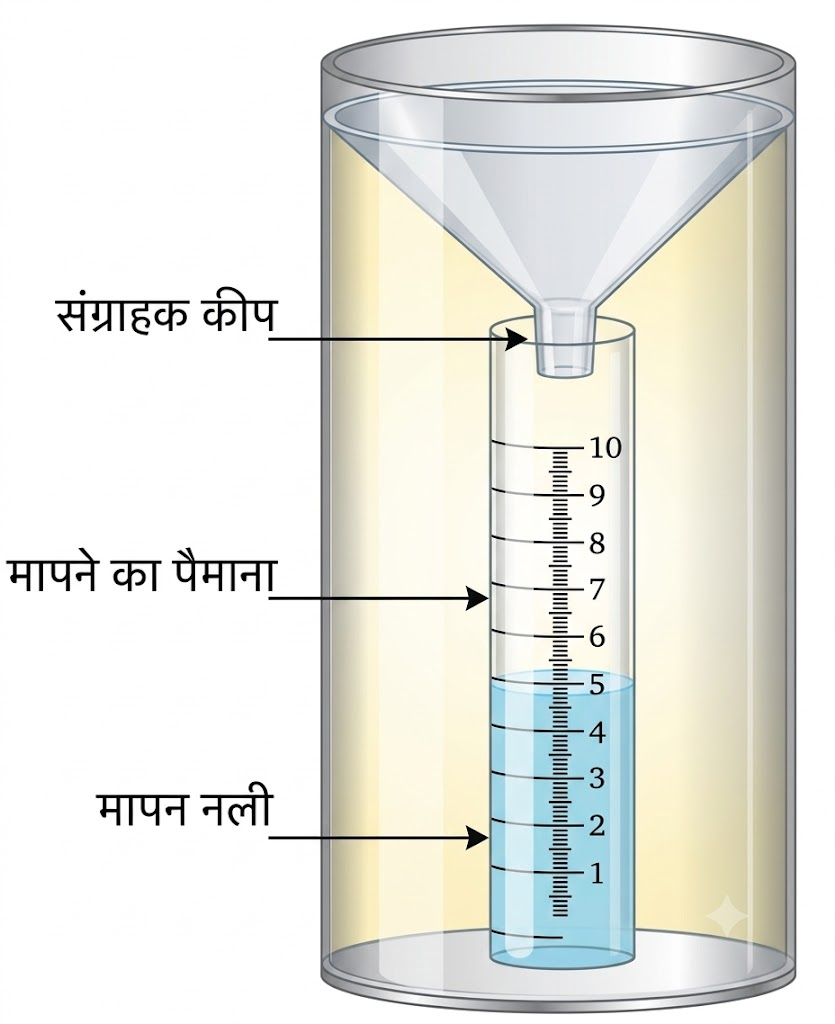
- मापन उपकरण (Rain Gauge): वर्षा की मात्रा रेन गेज (वर्षामापी) से मापी जाती है।
- कार्यप्रणाली: एक बेलनाकार पात्र में कीप (Funnel) लगी होती है जो पानी एकत्र करती है।
- मापन इकाई: मिलीमीटर (mm)। यदि जल का स्तर 5 mm एकत्र होता है, तो वर्षा की मात्रा 5 mm कही जाती है।
- बर्फबारी का मापन: हिमपात होने पर पहले बर्फ को पिघलाया जाता है, तत्पश्चात माप लिया जाता है।
c) वायुमंडलीय दबाव (Atmospheric pressure)
- अवधारणा: पृथ्वी की सतह पर ऊपर स्थित हवा के भार द्वारा डाला गया दबाव।
- ऊंचाई का प्रभाव:
- समुद्र तट (Sea Level): वायुदाब सर्वाधिक होता है (सामान्य मान ~ 1013mb)।
- पहाड़ों पर (High Altitude): ऊंचाई बढ़ने पर हवा विरल (Thin) होती है, जिससे वायुदाब घटता है।
- शरीर पर प्रभाव (Acclimatization): उच्च ऊंचाई (जैसे खारदुंग ला, लद्दाख – 5600 मीटर, जहाँ दाब ~ 650 mb होता है) पर ऑक्सीजन कम होने से सांस फूलना और चक्कर आना संभव है। इसके लिए शरीर को परिस्थितियों के अनुकूल ढालना पड़ता है।
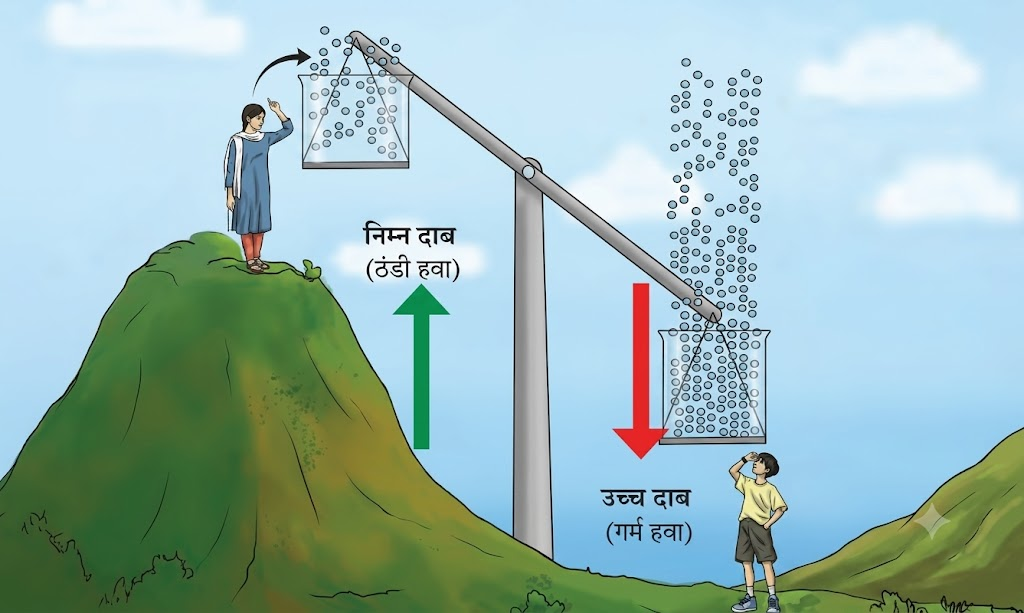
- अवदाब (Depression): यदि वायुदाब अचानक 1000 mb से नीचे गिरता है, तो यह चक्रवात या तूफान का संकेत देता है।
- मापक उपकरण: बैरोमीटर; इकाई: मिलीबार (mb)।
d) पवन (Wind)
- प्रवाह का नियम: हवा सदैव उच्च दाब (High Pressure) से निम्न दाब (Low Pressure) की ओर बहती है।
- दिशा मापन (Wind Vane / Weather Vane): इसका सिरा हवा की दिशा बताता है।
- विंड सॉक: हवाई अड्डों (Tarmac) पर रनवे की दिशा जानने और गैस रिसाव वाले उद्योगों में हवा का रुख देखने हेतु उपयोग किया जाता है।
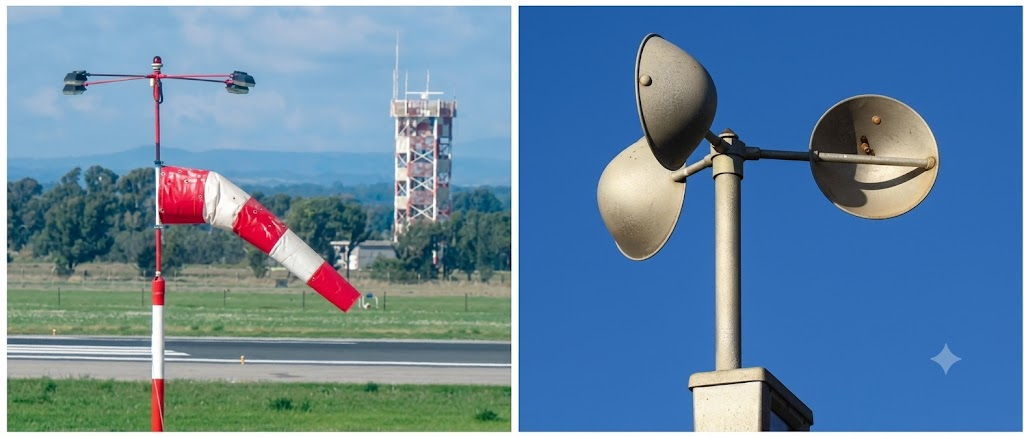
- गति मापन: एनीमोमीटर (पवनवेगमापी) में लगी घूमती कटोरियों (Cups) की मदद से हवा की गति किमी/घंटा (km/h) में मापी जाती है।
e) आर्द्रता (Humidity)
- परिभाषा: हवा में मौजूद जलवाष्प (Water Vapour) की मात्रा।
- सापेक्षिक आर्द्रता (Relative Humidity): इसे प्रतिशत (%) में व्यक्त किया जाता है।
- शुष्क मौसम: 20% से 40% सापेक्षिक आर्द्रता।
- आर्द्र/नम मौसम: 60% से 80% सापेक्षिक आर्द्रता।
- संतृप्त हवा (Saturated Air): 100% आर्द्रता।
- वाष्पीकरण पर प्रभाव: आर्द्रता अधिक होने पर वाष्पीकरण धीमा होता है (कपड़े देर से सूखते हैं और पसीना जल्दी नहीं सूखता)।
- मापक उपकरण: हाइग्रोमीटर।
- व्यावहारिक उपयोग: खाद्य प्रसंस्करण उद्योगों और संग्रहालयों (Museums) में प्राचीन वस्तुओं के संरक्षण हेतु आर्द्रता नियंत्रण अनिवार्य है।
प्रमुख मौसम उपकरण और उनका कार्य
| घटक (Element) | मापक उपकरण (Instrument) | मापन इकाई (Unit) | व्यावहारिक अनुप्रयोग |
| तापमान | थर्मामीटर | C / F | दैनिक तापमान परास व जलवायु आंकड़े एकत्र करना। |
| वर्षण | रेन गेज | मिलीमीटर (mm) | कृषि योजना और जल संसाधन प्रबंधन। |
| वायुदाब | बैरोमीटर | मिलीबार (mb) | चक्रवात, तूफान और मौसम प्रणाली का पूर्वानुमान। |
| पवन दिशा | विंड वेन / विंड सॉक | दिशा (N, S, E, W) | नेविगेशन, एविएशन (विमानन) और नौकायन। |
| पवन गति | एनीमोमीटर | किमी/घंटा (km/h) | तूफान चेतावनी और पवन ऊर्जा आकलन। |
| आर्द्रता | हाइग्रोमीटर | प्रतिशत (%) | खाद्य उद्योग, संग्रहालय एवं वस्त्र सुखाई प्रक्रि |
मौसम केंद्र (Weather Stations)
- परिभाषा: एक ही स्थान पर मौसम मापने के सभी उपकरणों का एकीकृत समूह।
- प्राथमिक कार्य: नियमित अंतराल पर मौसम संबंधी आंकड़े एकत्र करना, मानचित्रण करना और पूर्वानुमान जारी करना।
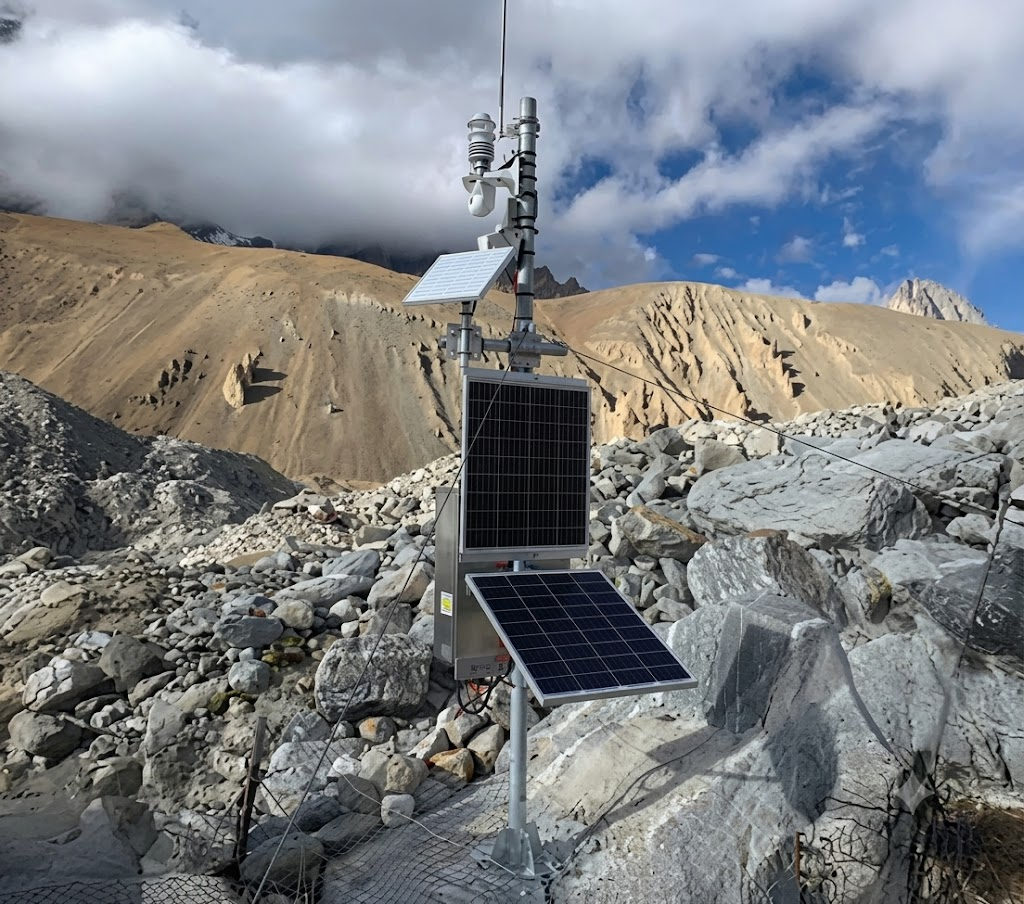
स्वचालित मौसम केंद्र (Automated Weather Station (AWS)
- स्वचालित प्रणाली: यह बिना मानवीय हस्तक्षेप (Human Intervention) के मौसम संबंधी आंकड़े मापने वाला स्व-संचालित उपकरण है।
- मापे जाने वाले घटक: तापमान, आर्द्रता, पवन की गति व दिशा, वर्षण (वर्षा) और वायुमंडलीय दबाव।
- प्रमुख अनुप्रयोग: कृषि, विमानन (Aviation), नौकायन (Navigation), और पर्यावरण निगरानी।
मौसम का पूर्वानुमान (Predicting the Weather)
- जलवायु परिवर्तन का प्रभाव: वैश्विक तापमान में वृद्धि से सूखा, बाढ़ और चक्रवात जैसी अतिवादी मौसमी घटनाएँ (Extreme Weather Events) अधिक बार आ रही हैं।
- आपदा प्रबंधन में महत्व:
- अग्रिम चेतावनी: मछुआरों को समुद्र में न जाने की सलाह देना और तटीय क्षेत्रों को खाली कराना (Evacuation)।
- संसाधन जुटाना: स्थानीय प्रशासनों को राहत व बचाव कार्य हेतु तैयार करना।
मौसमी चेतावनियाँ (IMD Weather Warning Alert System)
| कलर कोड | चेतावनी का स्तर | प्रशासनिक व सार्वजनिक कार्रवाई |
| Green (नो वॉर्निंग) | कोई चेतावनी नहीं | स्थिति सामान्य, किसी कार्रवाई की आवश्यकता नहीं। |
| Yellow (वॉच) | निगरानी रखें (Be Updated) | मौसम खराब हो सकता है; स्थिति पर नजर रखें। |
| Orange (अलर्ट) | तैयार रहें (Be Prepared) | गंभीर मौसम की संभावना; बचाव की तैयारी रखें। |
| Red (वॉर्निंग) | कार्रवाई करें (Take Action) | अत्यधिक खतरनाक मौसम; तत्काल सुरक्षात्मक कदम उठाएं। |
